Past Seminars

Date: November 5, 2025 at 3:30-5:00pm CDT, 265 McNutt Hall

Join a panel of experienced researchers as they share proven strategies and best practices to help you craft compelling proposals, navigate common challenges, and increase your chances of funding success.  This session is especially beneficial for individuals involved in proposal development. 

This free workshop is co-sponsored by the Intelligent Systems Center (ISC) and the Office of Vice Chancellor of Research and Innovation (OVCRI).
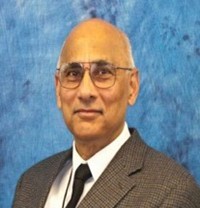
Dr. Sajal Das

Curators' Distinguished Professor of Computer Science
Daniel St. Clair Endowed Chair

Bio

Dr. Sajal Das, an IEEE Fellow, is a Curators' Distinguished Professor of Computer Science and Daniel St. Clair Endowed Chair in Computer Science at Missouri University of Science and Technology, Rolla. Prior to joining S&T in September 2013 as CS Chair, he was a University Distinguished Scholar Professor of Computer Science and Engineering and DIrector of the Center for Research in Wireless Mobility and Networking at the University of Texas at Arlington. During 2008–2011, he was a Program Director at the NSF in Computer Networks and Systems Division of the CISE Directorate. In 2012, he was selected as the E.T.S. Walton Fellow by the Science Foundation of Ireland. Dr. Das has visited numerous universities worldwide for collaborative research and is frequently invited as a keynote speaker at international conferences. His research interests include wireless sensor networks, mobile and pervasive computing, cyber-physical systems, IoT, smart environments (smart city, smart healthcare, smart grid, smart agriculture), machine learning and data science, distributed and edge computing, security, biological and social networks, and applied graph theory and game theory. Dr. Das has directed numerous funded projects totaling over $25M and published more than 650 research articles in high-quality journals and refereed conference proceedings. His h-index is 104 with more than 45,900 citations. He holds 5 US patents, co-authored 59 book chapters and four books titled Smart Environments: Technology, Protocols, and Applications (2005), Handbook on Securing Cyber-Physical Critical Infrastructure: Foundations and Challenges (2012), Mobile Agents in Distributed Computing and Networking (2012), and Principles of Cyber-Physical Systems: An Interdisciplinary Approach (2020). Dr. Das is a Distinguished Alumnus of the Indian Institute of Science, Bangalore, and a Fellow of the IEEE, National Academy of Inventors (NAI) and Asia-Pacific Artificial Intelligence Association (AAIA).

Dr. Ming Leu

Curators' Distinguished Professor of Mechanical and Aerospace Engineering
Keith and Pat Bailey Distinguished Professor

Bio

Dr. Ming Leu is the Curators' Distinguished Professor and Keith and Pat Bailey Distinguished Professor in the Department of Mechanical and Aerospace Engineering, Missouri University of Science and Technology. He founded Missouri S&T’s Center for Aerospace Manufacturing Technologies in 2004 and since then has been serving as its director until May 2016. Prior to joining Missouri S&T, he was a Program Director at the National Science Foundation (1996–1999), the State Chair Professor in Manufacturing Productivity at the New Jersey Institute of Technology (1987–1996), and a faculty member at Cornell University. Professor Leu obtained his Ph.D. degree in 1981 from the University of California at Berkeley, his M.S. degree in 1977 from the Pennsylvania State University, and his B.S. degree in 1972 from the National Taiwan University, all in Mechanical Engineering. Dr. Leu’s research interests include additive manufacturing, virtual prototyping, CAD/CAM, robotics, machine dynamics and control, and cyber-physical systems. He has published over 410 papers in refereed publications in professional journals and conference proceedings. Also, he has written one e-book and 10 book chapters and has been granted 4 U.S. patents.

Dr. Leu has received many professional awards, including the University of Missouri President’s Leadership Award (2017), ASME Blackall Machine Tool and Gage Award (2014), ISFA Hideo Hanafusa Outstanding Investigator Award (2008), MCASTA Outstanding Scholar Award (2006), ASME Distinguished Service Award (2004), Missouri S&T AMAE Faculty Excellence Award (2001 & 2004), NJIT Harlan J. Perlis Research Award (1993), NSF Presidential Young Investigator Award (1985), SAE Ralph R. Teetor Education Award (1985), and FPRS Wood Paper Award (1981), and was on the NJIT team to receive the CASA/SME University Lead Award (1994). He was elected to CIRP Fellow in 2008 and to ASME Fellow in 1993 and is a member of the Sigma Xi, Tau Beta Pi, and Phi Kappa Phi honor societies.

Dr. William G. (Bill) Fahrenholtz

Curators’ Distinguished Professor of Ceramic Engineering in the Department of Materials Science and Engineering

Bio

Dr. William G. (Bill) Fahrenholtz is a Curators’ Distinguished Professor of Ceramic Engineering in the Department of Materials Science and Engineering. He was elected a Fellow of the American Ceramic Society in 2007 and Academician of the World Academy of Ceramics in 2017.  Bill teaches graduate-level courses on technical communication and thermodynamics.  His current research focuses on the processing, characterization, and properties of advanced structural ceramics for use in environments with extreme thermal loads, mechanical forces, and/or chemical reactivities.  He has published over 225 papers in peer-reviewed journals on his research.

Dr. Kamal Khayat

Vice Chancellor for Research and Innovation
Vernon and Maralee Jones Professor of Civil Engineering

Bio

Professor Khayat is the Vernon and Maralee Jones Professor of Civil Engineering and Vice-Chancellor for Research and Innovation at Missouri S&T, Rolla, MO. He served as Director of the Center for Transportation Infrastructure and Safety, a National University Transportation Center (UTC), and the Tier-1 UTC, Research on Concrete Applications for Sustainable Transportation. Currently, he serves as the Associate Director of the Center for Durable and Resilient Transportation Infrastructure Tier-1 UTC. He was Professor in the Department of Civil Engineering at the Université de Sherbrooke in Quebec, Canada. During his 21 years there, he served as Director of the Integrated Research Laboratory on Materials Valorization and Innovative and Durable Structures.

Dr. Khayat’s conducted pioneering research rheology of cement-based materials, high-performance concrete with adapted rheology, self-consolidating concrete, and underwater concrete. He chaired/co-chaired several international conferences, including the 2020 Gordon Research Conference (Ventura Beach, CA), SCC2016 (Washington, DC), SCC2010 (Montreal), and other conferences in China, France, Poland, and the UAE.

Dr. Khayat has authored over 550 publications, 11 books and book chapters, and served as editor/co-editor of 19 books and conference proceedings. Based on research citations, quality, and impact, he was recognized in 2018-23 as a Top 2% Scientist by Stanford University rankings of global scientists and engineers. Professor Khayat received his undergraduate and graduate degrees in Civil Engineering from the University of California at Berkeley.

Dr. Manashi Nath

Professor, Department of Chemistry

Bio

Dr. Manashi Nath, graduated with PhD from Indian Institute of Science, Bangalore with research expertise on inorganic nanomaterials. She carried out postdoctoral research under Prof. Brice Parkinson at the Colorado State University, Fort Collins, CO, focusing on superconducting nanostructures. Dr. Nath joined Missouri University of Science and Technology in 2008 and has established a research group focusing on developing functional materials for various applications ranging from renewable energy conversion, environmental mitigation to biosensors and biomedical devices. Current research project in the group focuses on (i) developing novel electrocatalysts for electrochemical and photoelectrochemical water splitting; (ii) designing new catalytic systems for reduction of CO2 to carbon-rich fuels and chemicals thereby closing the carbon loop; (iii) developing electrochemical sensors for detecting various biomarkers for metabolic and neurodegenerative diseases; (iv) growing nanorod and nanotube arrays for solar energy conversion; and (v) growing magnetic nanostructure arrays for theranostic applications.  
 

Dr. Seung-Jong (Jay) Park

Kummer Endowed Professor and Chair of Computer Science

Bio

Dr. Seung-Jong (Jay) Park is the Kummer Endowed Professor and the Chair of the Computer Science Department of the College of Engineering and Computing at the Missouri University of Science & Technology. He has worked in cyberinfrastructure development for large-scale scientific and engineering applications since 2004 after he received his Ph.D. in the School of Electrical and Computer Engineering from the Georgia Institute of Technology. He has performed interdisciplinary research projects including (1) big data and deep learning research, developing software frameworks for large-scale science applications; and (2) cyberinfrastructure development using cloud computing, high-performance computing, and high-speed networks. Those projects have been supported by federal and state funding programs including NSF, NASA, NIH, ONR, and AFRL. He received IBM faculty research awards between 2015–2017. Dr. Park was Dr. Fred H. Fenn Memorial Professor of Computer Science and Engineering at Louisiana State University before joining Missouri S&T. He also served as an associate director for the Center for Computation and Technology at LSU between 2016–2018. Between 2021–2023, he served at the U.S. National Science Foundation as a program director managing research support programs such as Cyberinfrastructure for Sustained Scientific Innovation (CSSI), Principles and Practice of Scalable Systems (PPoSS), Computational and Data-Enabled Science and Engineering (CDS&E), and others.

Dr. Donald Wunsch II

Mary K. Finley Missouri Distinguished Professor
Director of the Kummer Institute Center for AI and Autonomous Systems

Bio

Dr. Don Wunsch is the Mary K. Finley Missouri Distinguished Professor of Electrical and Computer Engineering and Director of the Kummer Institute Center for AI and Autonomous Systems.  He is also the director of the Applied Computational Intelligence Laboratory at Missouri S&T. Earlier employers include Texas Tech University, Boeing, Rockwell International, and International Laser Systems. His education includes an Executive MBA from Washington University in St. Louis; Ph.D. and M.S. in Electrical Engineering and Applied Mathematics from the University of Washington (Seattle); B.S. in Applied Mathematics from the University of New Mexico; and the Jesuit Core Honors Program at Seattle University. His key research contributions are in clustering and unsupervised learning; adaptive resonance and reinforcement learning architectures, hardware, and applications; neuro-fuzzy regression; traveling salesman problem heuristics; robotic swarms; and bioinformatics. He is an IEEE Fellow, previous INNS President, INNS Fellow and Senior Fellow (2007–2013), NSF CAREER Award winner, and recipient of the 2015 INNS Gabor Award.

Dr. Wunsch served as IJCNN General Chair and on several boards, including the St. Patrick’s School Board, IEEE Neural Networks Council, International Neural Networks Society, and the University of Missouri Bioinformatics Consortium. He chaired the Missouri S&T Information Technology and Computing Committee as well as the Student Design and Experiential Learning Center Board. He has produced 19 Ph.D. recipients in computer, electrical, systems engineering, and computer science; attracted over $10 million in sponsored research; and authored over 400 publications, including nine books. His research has been cited over 13,000 times.

Dr. Rathindra (Babu) DasGupta | Seminar Speaker

Consultant to the Great Lakes Region I-Corps™ Hub

Talk Title:  Discovery to Innovation: From the lab to the world

Date: September 15, 2025 @ 3:30pm-4:30pm CDT

Join In-Person: Innovation Lab Forum

Moving from discovery to innovation is one of the greatest challenges—and opportunities—for researchers and innovators. Too often, promising ideas stall before reaching real-world impact. This session explores how to bridge that gap by reframing discovery as the foundation for innovation. We will distinguish between discovery and innovation, highlight the role of use-inspired research, and introduce practical frameworks for assessing innovation readiness—technology maturity, stakeholder needs, business models, and partnerships. Case examples will illustrate how research can evolve into solutions that address pressing societal challenges. Participants will leave with guiding questions, strategies, and resources to help them navigate the journey from lab to marketplace or community. Above all, this session emphasizes a mindset shift: advancing knowledge is essential but applying that knowledge to create value is what drives lasting impact.

Dr. Rathindra (Babu) DasGupta is a highly accomplished professional with a diverse background spanning academia, industry, and government. Currently an independent consultant and part-time Innovation Corps (I-Corps™) outreach specialist with the University of Michigan, he previously dedicated a decade to the National Science Foundation (NSF). At the NSF, he served as a program director, overseeing key programs such as SBIR, I/UCRC, and I-Corps™, within the division of industrial innovation and partnerships. His industry experience includes leadership roles as chief scientist at the CONTECH division of SPX Corporation and as technical director at Meta Mold, Amcast Industrial Corporation. Before his work in industry, he held various professorships at institutions including the Milwaukee School of Engineering, UW-Madison, and Western Michigan University. A recipient of numerous accolades, he was named an NAI Fellow in 2013, received the Herman H. Doehler Award, earned the Raymond D. Peters Endowed Professorship, and a Certificate of Commendation from the Minister of Science and ICT, Republic of Korea for outstanding contributions to technology commercialization.  He has five patents and has authored numerous publications, solidifying his reputation as a leader in technology commercialization and innovation.

Dr. Fred B. Holt | Mathematics & Statistics Colloquium Speaker

Talk Title:  Patterns among the Primes: Eratosthenes sieve as a discrete dynamic system

Date: April 25, 2025 @10:15am-11:00am

Join In-Person: 250 Toomey Hall

Join on Zoom:  Meeting ID: 960 3136 0525 Passcode: 696643
We study Eratosthenes sieve as a discrete dynamic system. At each stage of the sieve there is a cycle of gaps among the remaining candidate primes or p-rough numbers. These cycles were identified by Polignac in 1849. We have identified a 3-step recursion that produces the next cycle of gaps from the current one. This recursion across the cycles of gaps defines a discrete dynamic system. We are able to produce exact models for the relative populations of gaps and constellations of gaps across all stages of Eratosthenes sieve. These models align with Hardy & Littlewood’s 1923 estimates. The models of the relative populations yield estimates of the populations of gaps among primes. Samples from the gaps among primes agree with these estimates to first order.

Dr. Fred B. Holt studied combinatorics under Vic Klee and Branko Grünbaum at the University of Washington. He has worked in industry and with startup companies, contributing technical innovations, operational efficiencies, and data-driven strategic planning. Dr. Holt continues to pursue a few challenges in pure mathematics, including the distribution of prime numbers. 

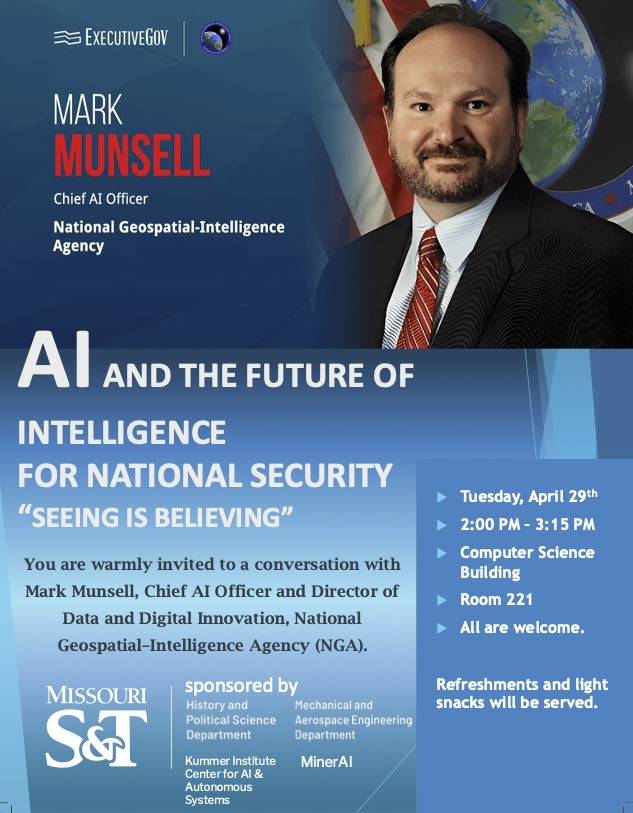
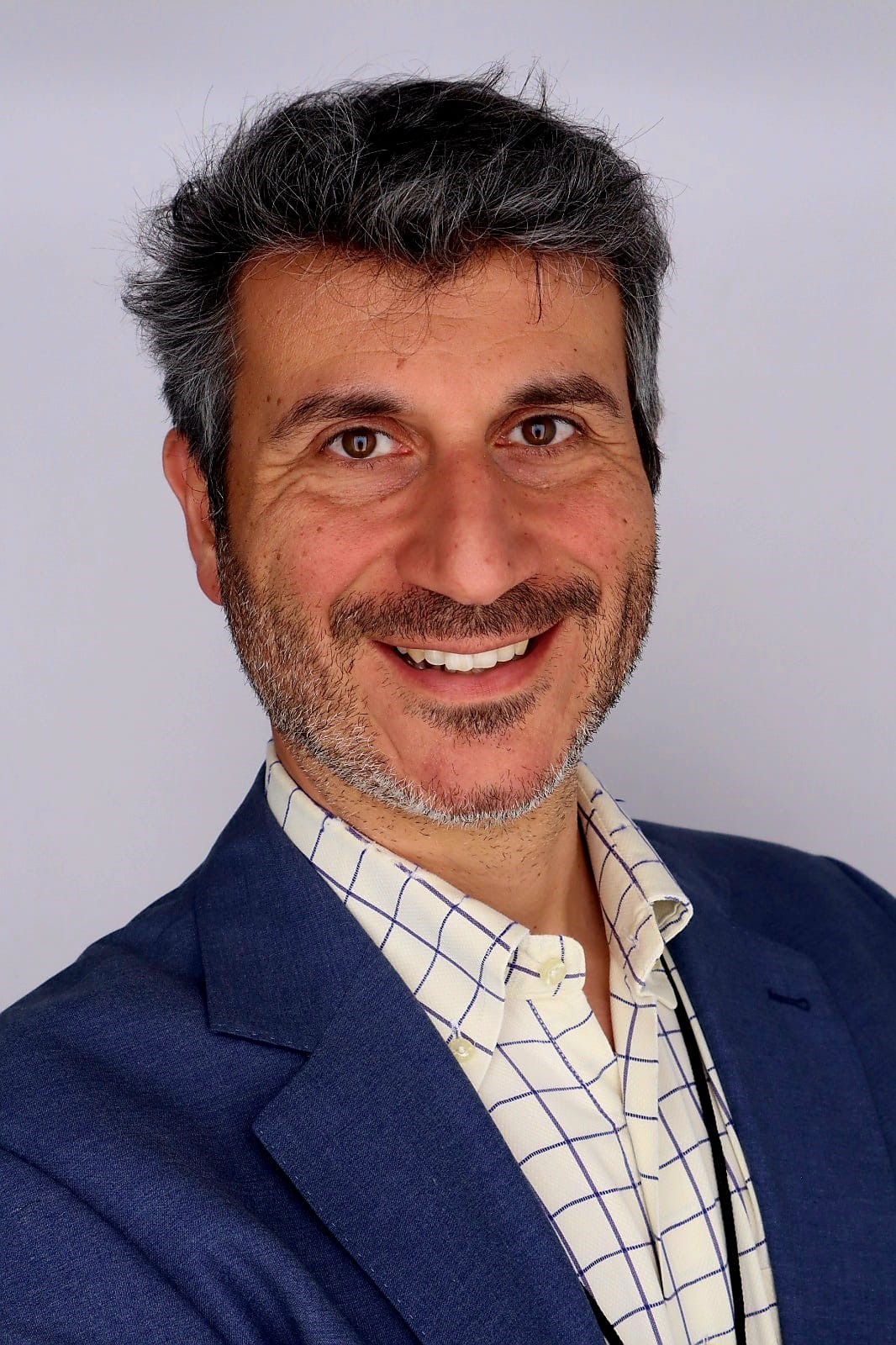
Mark Munsell | Seminar Speaker

Chief AI Officer at the National Geospatial-Intelligence Agency (NGA)

Talk Title:  AI and the Future of Intelligence for National Security: Seeing Is Believing

Date: April 29, 2025 @2:00pm-3:15pm

Join In-Person: 221 Computer Science
 

Dr. Simone Silvestri | Seminar Speaker

Associate Professor and Director of Graduate Studies at the University of Kentucky

Talk Title:  Climbing the Doctoral Mountain: Essential Strategies for a Successful PhD

Date: April 14, 2025 @9:00am CDT

Join In-Person: Innovation Lab Forum
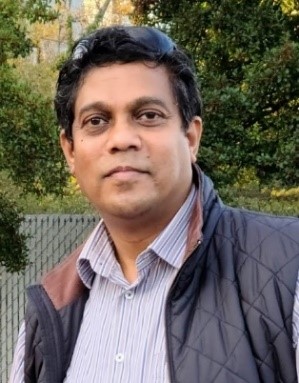
 

The PhD journey is a pivotal experience, marked by significant decisions and challenges that shape both academic and professional futures. In this keynote talk, we first talk about Dr. Silvestri’s path towards interdisciplinary research. Specifically, we discuss challenges and lessons learned while transitioning from pure networking research to cyber-physical systems applied to various multi-disciplinary domains, such as smart energy systems and smart agriculture. Subsequently, we delve into the critical aspects of a successful PhD journey, beginning with practical tips for success in both your PhD and your future career and how to avoid common pitfalls that many PhD students encounter. Among these challenges, we will discuss how to deal with paper rejections as well as with the impostor syndrome, a prevalent issue in academia, often undermining confidence and mental health. We will explore strategies to understand how success is achieved in the world of academia and help overcome the feelings of insecurity at the basis of this syndrome.

Simone Silvestri is currently an Associate Professor in the Department of Computer Science of the University of Kentucky. He received his Ph.D. in Computer Science in 2010 from the Department of Computer Science of the Sapienza University of Rome, Italy. Dr. Silvestri's research is funded by several national and international agencies such as NIFA, NATO and the NSF, and he received the NSF CAREER award in 2020. He published more than 90 papers in international journals and conferences. He served in the organizing committee of several international conferences including as General Co-Chair of IEEE ICNP, Technical Program Co-Chair of IEEE SECON, IEEE SmartComp, ACM ICDCN, and IEEE DCOSS. He serves on the Editorial Board of several journals and received the Excellent Editor Award from IEEE Transactions on Network and Service Management and Elsevier Pervasive and Mobile Computing. He also served in the Technical Program Committee of more than 100 conferences. In 2023, Dr. Silvestri launched a YouTube channel, CSMentor, which now has almost 2000 subscribers from all over the world and more than 100,000 views. On CSMentor, Dr. Silvestri provides mentoring advice to computer science and engineering students who are stepping into the world of research and education to guide them in more successfully navigating the world of academia.

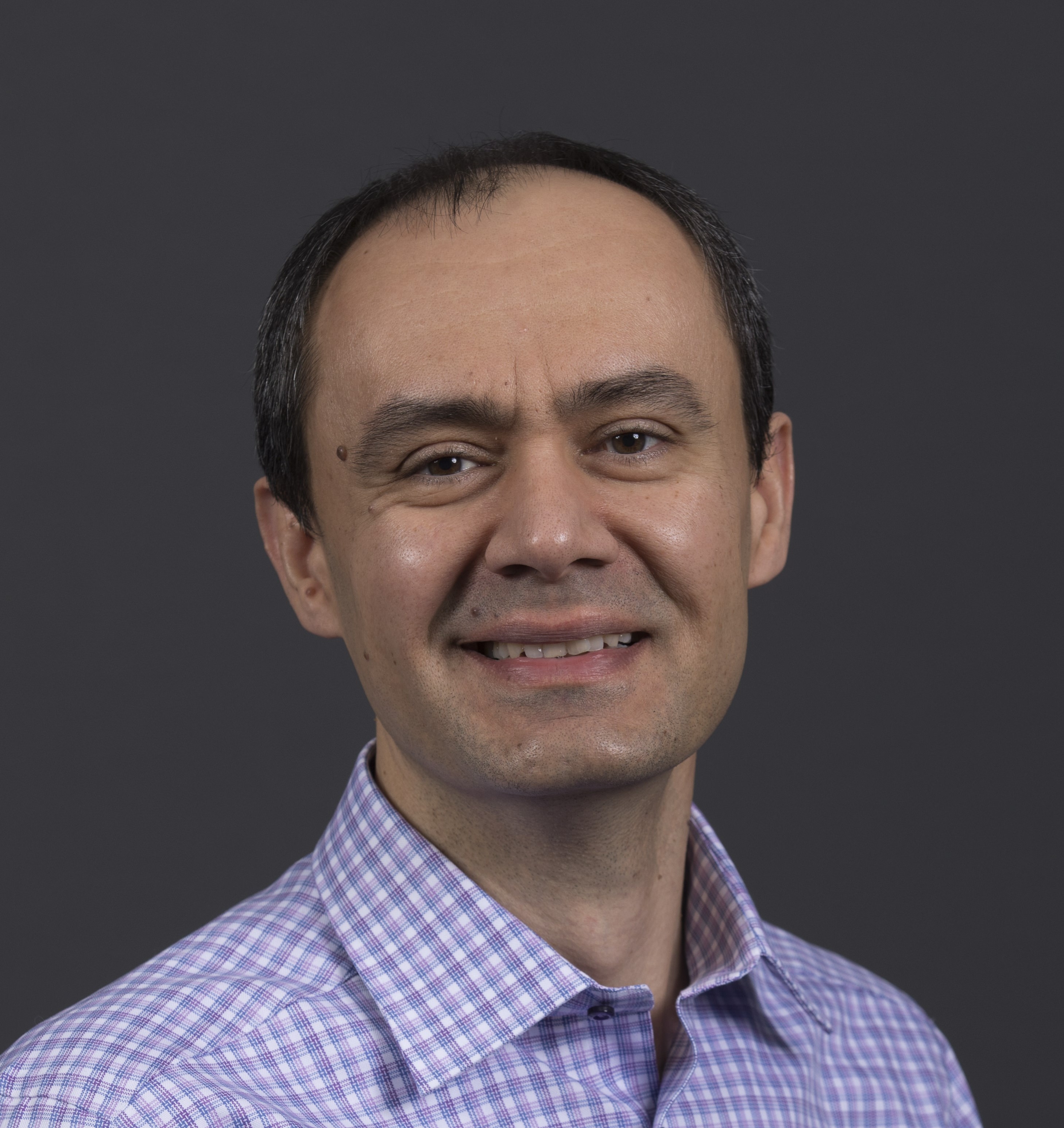
Dr. G Kumar Venayagamoorthy | Seminar Speaker

Duke Energy Distinguished Professor of Power Engineering and Professor of Electrical and Computer Engineering at Clemson University

Talk Title: Data-Driven Modeling and Optimization of Smart Grid Operations and Management via Cellular Computational Networks and Graphs

Date: April 1, 2024 @ 4:00pm CDT
 

Data is one of the most valuable assets for industrial businesses such as electricity generation and delivery industry. It is known today that businesses increasingly prefer data-driven decision-making to intuition-based decision-making, which probably accounts for why the data analytics market is growing at a compound annual rate of nearly 30%. It is challenging to analyze oceans of unstructured data. AI and machine learning (ML) technologies will allow businesses to analyze these unstructured data in a smarter and faster way. These technologies can also discover patterns and trends in structured data that are not easily observable. Furthermore, the volume of this data is so vast it causes a major strain on traditional (including AI/ML) models of computing where everything is controlled and analyzed centrally.

New frameworks and methodologies are needed to turn data into insight, technologies into strategy and opportunities into value and responsibility, and bring micro-analytics closer to the end-customer. In addition, predictive and prescriptive analytics should be adaptive, catering for decision-making based on real-time data with an extremely high degree of accuracy. In short, intelligent data analytics and data-driven approaches is the new oil, but one needs a powerful engine to extract, refine and harness it efficiently. This seminar will present a distributed computational framework (/engine) for intelligent data analytics and data-driven modeling via cellular computational networks (CCNs) and graphs. Several case studies of predictive and/or prescriptive analytics with CCNs in smart grid operations and management will be presented.

Dr. G. Kumar Venayagamoorthy is the Duke Energy Distinguished Professor of Power Engineering and Professor of Electrical and Computer Engineering at Clemson University. He is the Founder and Director of the Real-Time Power and Intelligent Systems (RTPIS) Laboratory. Dr. Venayagamoorthy received his PhD and MScEng degrees in Electrical Engineering from the University of Natal, South Africa.  He received his BEng degree with a First-Class Honors in Electrical and Electronics Engineering from Abubakar Tafawa Balewa University, Nigeria. Dr. Venayagamoorthy holds an MBA degree in Entrepreneurship and Innovation from Clemson University, USA.

Dr. Venayagamoorthy’s research interests are in the development and innovation of artificial intelligence, power systems and smart grid technologies. He is an inventor of technologies for scalable computational intelligence for complex systems and dynamic stochastic optimal power flow. He has published ~ 600 refereed technical articles which are cited over 23,000 times with a h-index of 70 and i10-index of > 300. Dr. Venayagamoorthy has given over 500 invited technical presentations including several keynotes and plenaries in over 40 countries to date.  Dr. Venayagamoorthy has been ranked by Elsevier/Stanford University among the Top 26,000 scientists worldwide across all fields and in the top 0.1% worldwide in the fields of energy and AI in four consecutive years.

Dr. Venayagamoorthy is a Fellow of the IEEE, IET (UK), the South African Institute of Electrical Engineers (SAIEE) and Asia-Pacific Artificial Intelligence Association (AAIA), and a Senior Member of the International Neural Network Society (INNS). He is the Editor of the IEEE Press Series on Power and Energy Systems. Dr. Venayagamoorthy is a Distinguished Lecturer of the IEEE Computational Intelligence Society (CIS), Industry Applications Society (IAS) and Industrial Electronics Society (IES). He is also a Member of the Board of Governors and the Vice-President for Industry Relations of the INNS.

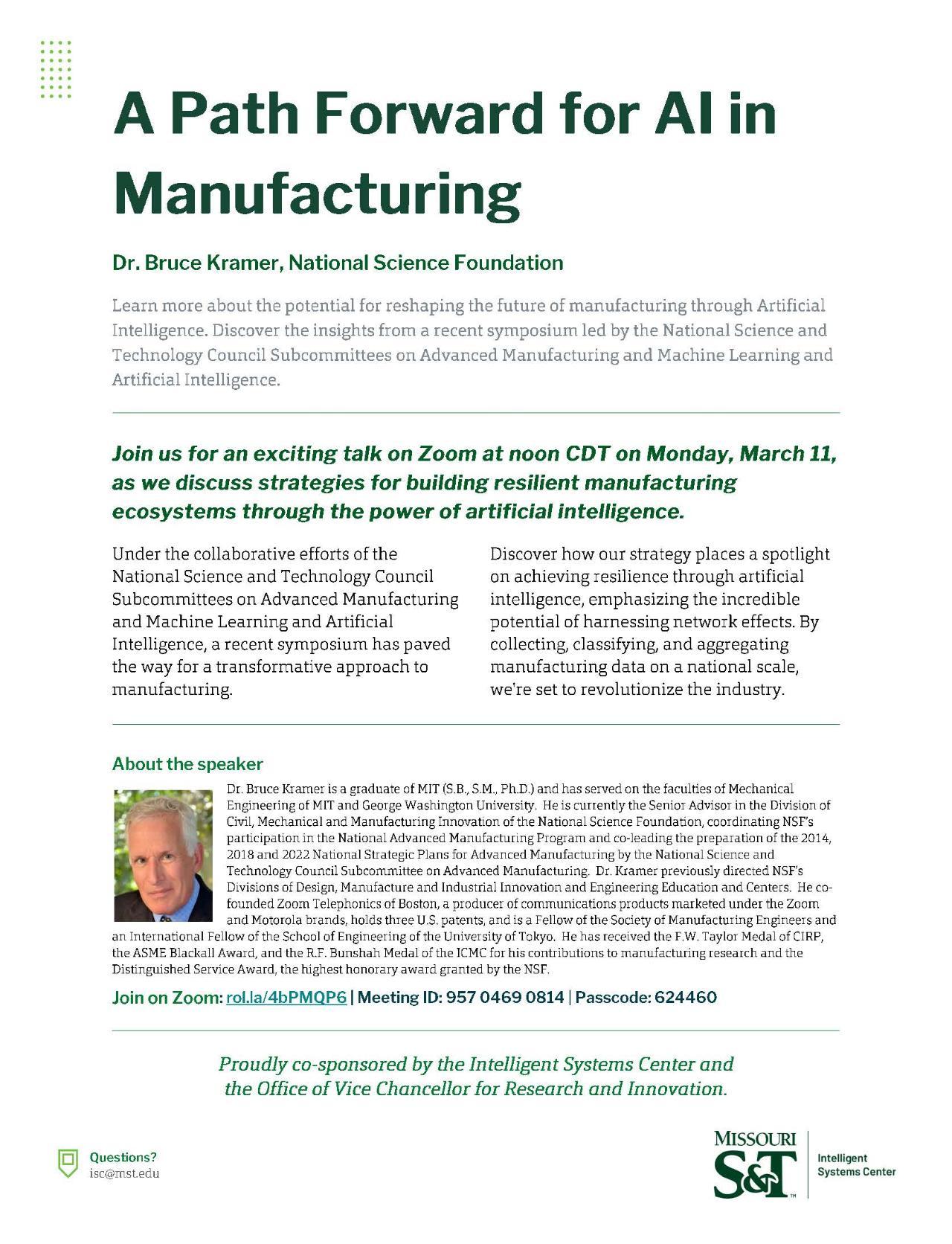
Dr. Bruce Kramer | Seminar Speaker

National Science Foundation

Talk Title: A Path Forward for AI in Manufacturing

Date: March 11, 2024 @ 12:00pm - 1:00pm CDT


A recent symposium under the joint auspices of the National Science and Technology Council Subcommittees on Advanced Manufacturing and Machine Learning and Artificial Intelligence has produced the outline of a strategy for achieving resilient manufacturing ecosystems through artificial intelligence, https://www.nist.gov/publications/towards-resilient-manufacturing-ecosystems-through-artificial-intelligence-symposium .  That strategy emphasizes the potential to harvest network effects by gathering, classifying, and aggregating manufacturing data at national scale.  Similar models have transformed other industries in which the United States now leads the world but runs counter to the prevailing manufacturing culture, which emphasizes implementing proprietary solutions on the factory floor and keeping information close.  That orientation exaggerates the importance of explicit domain knowledge and ignores the potential of AI methods to extract the implicit manufacturing expertise incorporated in the billions of parts that manufacturers are producing and have previously produced.  It can also provide AI entrepreneurs an opportunity to adapt transformational business models successfully applied in other industries to the $2 trillion per year US manufacturing sector.   The talk will illustrate how an AI-driven manufacturing service infrastructure might operate.

Dr. Bruce Kramer is a graduate of MIT (S.B., S.M., Ph.D) and has served on the faculties of Mechanical Engineering of MIT and George Washington University.  He is currently the Senior Advisor in the Division of Civil, Mechanical and Manufacturing Innovation of the National Science Foundation, coordinating NSF’s participation in the National Advanced Manufacturing Program and co-leading the preparation of the 2014, 2018 and 2022 National Strategic Plans for Advanced Manufacturing by the National Science and Technology Council Subcommittee on Advanced Manufacturing.  Dr. Kramer previously directed NSF’s Divisions of Design, Manufacture and Industrial Innovation and Engineering Education and Centers.  He co-founded Zoom Telephonics of Boston, a producer of communications products marketed under the Zoom and Motorola brands, holds three U.S. patents, and is a Fellow of the Society of Manufacturing Engineers and an International Fellow of the School of Engineering of the University of Tokyo.  He has received the F.W. Taylor Medal of CIRP, the ASME Blackall Award, and the R.F. Bunshah Medal of the ICMC for his contributions to manufacturing research and the Distinguished Service Award, the highest honorary award granted by the NSF.

Dr. Mehdi Ferdowsi | Seminar Speaker


Missouri S&T

Talk Title: NSF Rotating Program Director, Experiences and Lessons Learned

Date: November 18, 2022 @ 12:00pm - 1:00pm CDT
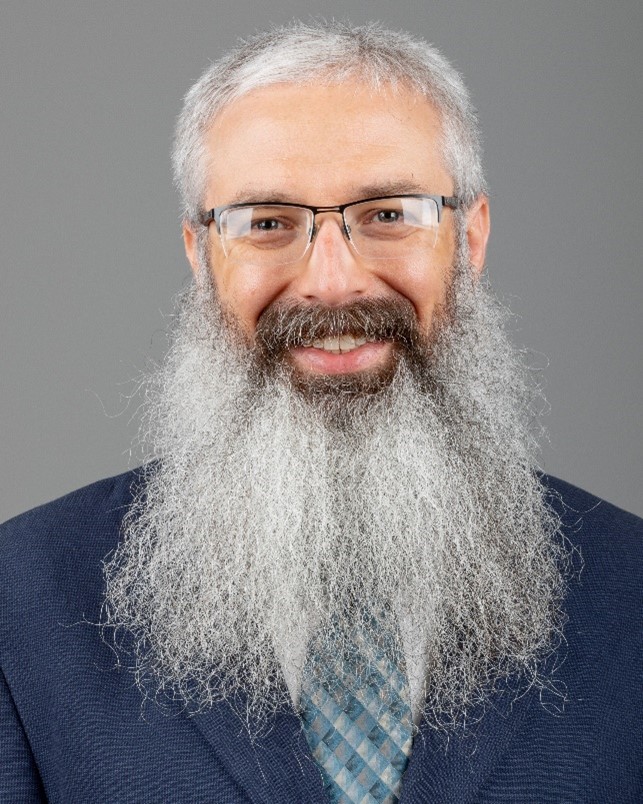
This talk goes through some of the experiences that Dr. Mehdi Ferdowsi gained while serving at NSF as a program director.  It will also cover some of the inner workings of the NSF ERC (Engineering Research Center) program.

Mehdi Ferdowsi joined Missouri S&T in 2004.  He is a professor of electrical and computer engineering, interim associate dean of research for the college of engineering and computing, and an ISC investigator.  From 2020 to 2022, he served at NSF as a program director at the Division of Engineering Education and Centers (EEC).  His research interests are in the areas of power electronics, energy storage, smart grid, vehicular technology, and wide bandgap devices.  He was a recipient of an NSF CAREER Award in 2007. 

Dr. Jonathan Kimball | Seminar Speaker


Missouri S&T

Talk Title: Challenges and Success with the Department of Energy

Date: April 15, 2022 @ 1:00pm - 2:00pm CDT
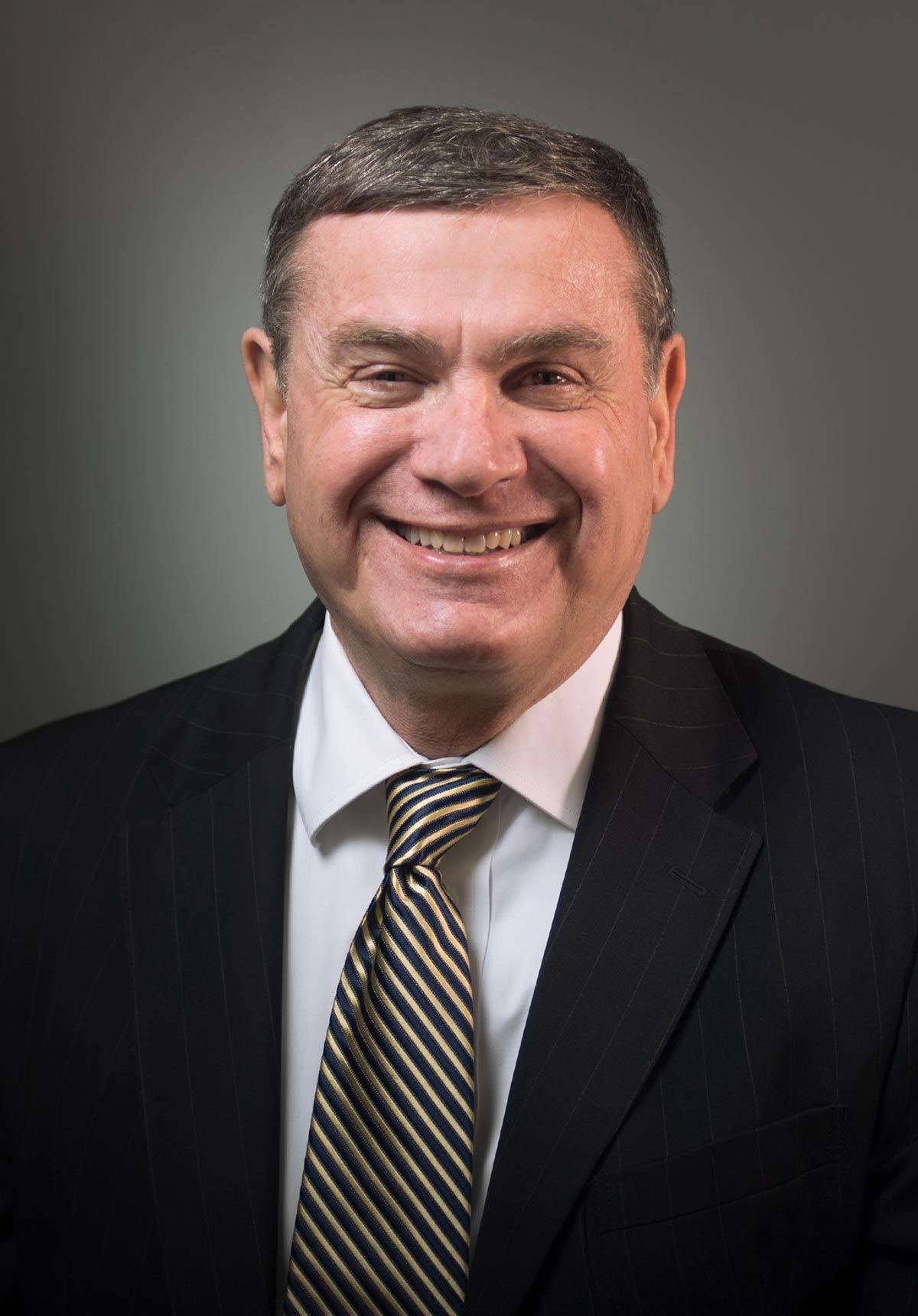
This talk will address two projects funded by the Department of Energy.  One was focused on education and workforce development.  The other is currently active, "Enabling Extreme Fast Charging with Energy Storage."  DOE projects pose unique challenges, both in obtaining the funding and in executing the project.  These challenges will be discussed along with some strategies that have been successful.

Dr. Jonathan Kimball is a professor of electrical and computer engineering, an ISC investigator, and the director of the Center for Research on Energy and the Environment.  He has roughly ten years of industry experience at Motorola, Baldor, and a start-up company (SmartSpark Energy Systems).  He joined Missouri S&T in 2008 after completing his doctoral students at the University of Illinois at Urbana-Champaign.

Dr. Richard Billo | Seminar Speaker


Missouri S&T

Talk Title: KI CAM Vision

Date: March 11, 2022 @ 12:00pm - 1:00pm CST
The Kummer Institute Center for Advanced Manufacturing has been founded for the express purpose of carrying out two distinct missions:

  1. to promote economic development for Rolla and Southern Missouri through the location of Missouri manufacturing companies and their employees within the Missouri Protoplex (the future home of KICAM) to carry out advanced manufacturing research and development; and
  2. to increase S&T research across the university by co-locating faculty with manufacturers within the Protoplex to carry out research in manufacturing and new product development in cooperation with these companies.

KICAM will carry out its mission with industrial-sized equipment and will conduct research in the TRL 4–6 range. The focus of KICAM will be to promote research in support of existing S&T research centers. The Missouri Protoplex building is a 217,000 square foot building with 80,000 square feet of manufacturing high bay space. Early thinking for programming for KICAM and the Missouri Protoplex building is currently under discussion, but will be decided by June 2022.

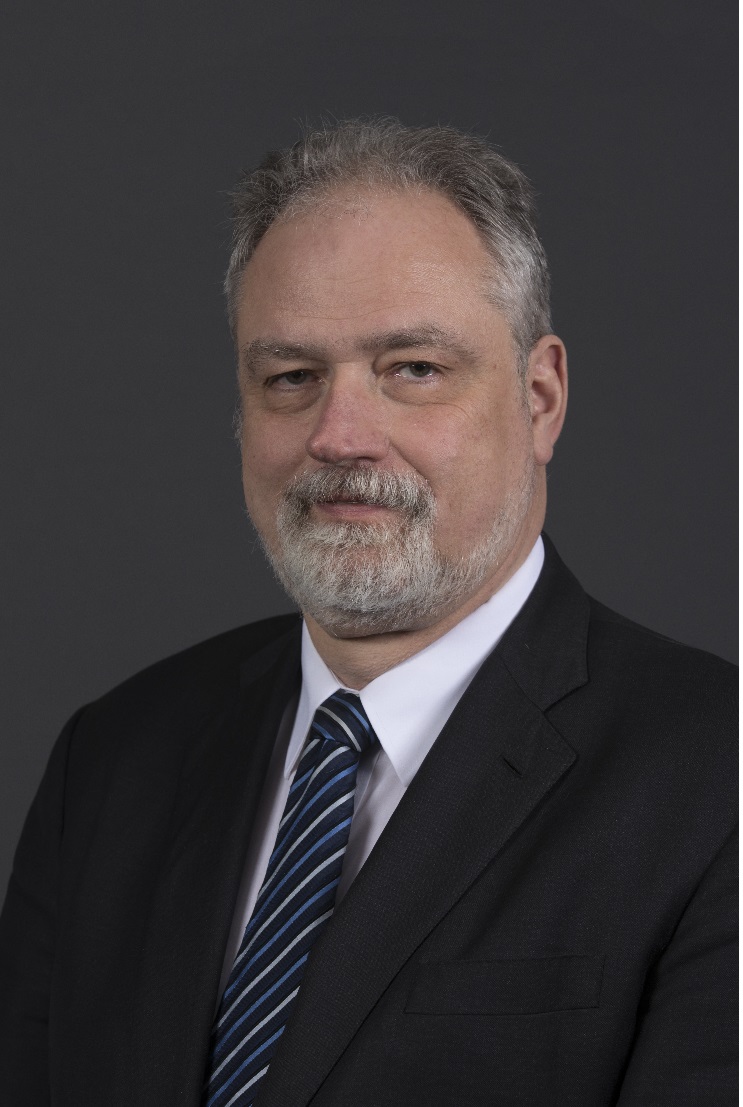
Dr. Richard Billo has recently accepted the position as founding director of the Kummer Institute Center for Advanced Manufacturing and professor of mechanical and aerospace engineering at Missouri S&T. In this role, Billo’s intention is to co-locate S&T faculty with Missouri manufacturers for the purpose of advancing economic development and manufacturing research for the region. Previously, he served as associate vice president for research, associate dean for engineering research, and department head of industrial and manufacturing engineering at the University of Notre Dame, University of Texas at Arlington, and Oregon State University, respectively. Billo has also held the position as head of the editorial board for the Journal of Manufacturing Processes and the Journal of Manufacturing Systems. He has been recognized by his peers through awarding of the Outstanding Faculty Award and Whiteford Faculty Fellowship. He has five issued patents from which were issued four licenses to industry for his research in manufacturing and information systems, and has published over 100 research articles.

Dr. Bruce McMillin | Seminar Speaker


Missouri S&T

Talk Title: How to ERC

Date: February 11, 2022 @ 12:00pm - 1:00pm CST


Established in 1984, the NSF Engineering Research Center (ERC) program was created to build complex research centers that emphasize system aspects of engineering with strong industrial collaboration and contain a strong education component. Successive generations of ERCs have kept these fundamental principles while increasing diversity and inclusion, an innovation ecosystem, and stressing convergent research.

This talk will present the speaker's experience on the leadership team of the Future Renewable Electric Energy Delivery and Management system (FREEDM) from its inception to its graduation. Key aspects of what makes a successful proposal and what some of the pitfalls are will be discussed.

Dr. Bruce McMillin is professor of computer science, director of the Center for Information Assurance and co-director of the Center for Smart Living at Missouri S&T. He leads and participates in interdisciplinary teams in formal methods for fault tolerance and security in distributed embedded systems with and eye towards critical infrastructure protection. His current work focuses on protection for advanced power grid control. His research has been supported by the U.S NSF, AFOSR, DOE, NIST and several Missouri industries. McMillin has authored over 120 refereed papers in international conferences and journals. He is a senior member of the IEEE and member of the IFIPWG 11.0 on Critical Infrastructure Protection. He is a commissioner of the ABET Computing Accreditation Commission, serves as a director of the CSAB accreditation board, and is an IEEE Computer Society distinguished visitor.